
Are you struggling with fender failures? Many manufacturers cut corners with low-quality rubber. This leads to early damage and high replacement costs, a major problem in our industry.
The most important rubber property for a fender is its ability to absorb energy and react with low force. High-quality rubber compounds ensure durability, elasticity, and resistance to weathering, ozone, and seawater. This guarantees a long service life and reliable protection for both vessels and structures.
<sup id=](https://sohodaddy.cn/wp-content/uploads/2025/08/make-a-picture-for-the-following-illustration-wha.jpg) 1 showing its texture and robustness" title="Rubber Fender Properties" />
1 showing its texture and robustness" title="Rubber Fender Properties" />
The quality difference between markets is huge. In some places, owners expect fenders to last only a year or two. But in Europe and America, they expect a lifespan of five, eight, or even more years. The problem is, general contractors often buy the fenders, not the final owners. These contractors focus on cost, not quality. They don't have good ways to check the rubber's properties. This creates an opportunity for some factories to use cheap, bad materials. This practice hurts everyone in the long run. I've seen firsthand how this choice can lead to disaster, undermining trust and destroying businesses. We need to talk more about what makes good rubber good.
What is the main property of rubber?
Worried about your rubber fender1s cracking or breaking down too soon? This often happens when the rubber's basic properties are poor, leading to costly and frequent replacements for your facility.
The key property of rubber is its elasticity. This allows it to deform under stress, like a ship berthing, and then return to its original shape. Good rubber also resists aging from sunlight, ozone, and saltwater2, which is crucial for marine environments.
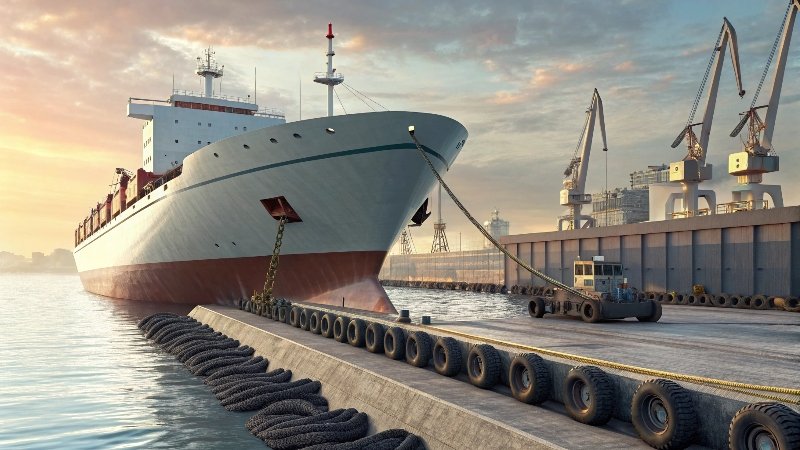
When we talk about rubber for fenders, we are really talking about a specific set of characteristics. The ability to stretch and bounce back is number one. This is what allows the fender to absorb a huge amount of impact energy from a vessel. But it's not just about that initial bounce. The rubber must maintain this property for years, even when exposed to harsh marine conditions3. I have seen many cases where fenders look fine on delivery, but after a year in the sun and sea, they become brittle and crack. This is because the rubber compound4 was not formulated correctly to resist environmental factors. A good fender rubber must balance several properties.
| Property | Description | Why it Matters for Fenders |
|---|---|---|
| Elasticity | The ability to return to its original shape after being stretched or compressed. | This is the core function of absorbing impact energy. |
| Tensile Strength5 | The resistance of the material to breaking under tension. | Prevents the fender from tearing apart during a heavy berthing. |
| Durability | The ability to withstand wear, pressure, and damage. | Ensures a long service life6, reducing replacement costs. |
| Weather Resistance7 | Resistance to UV light, ozone, and temperature changes. | Prevents cracking and degradation from environmental exposure. |
What is a rubber fender1?
Are you confused about what a rubber fender1 actually is? It seems simple, but its role in protecting billions of dollars in assets is critical, and not all fenders are created equal.
A rubber fender1 is a large rubber bumper used in ports and on boats. Its job is to act as a cushion. It absorbs the kinetic energy when a vessel bumps against a dock or another vessel, preventing damage.
<sup id=](https://sohodaddy.cn/wp-content/uploads/2025/08/make-a-picture-for-the-following-illustration-wha-3.jpg) 1s" title="Rubber Fender in Action" />
1s" title="Rubber Fender in Action" />
Think of a rubber fender1 as a giant shock absorber8. When a massive ship comes into port, it doesn't just stop perfectly. It will nudge and press against the jetty. Without fenders, this huge force would crack the concrete jetty or dent the ship's hull. The fender compresses, taking in all that energy. Then, it slowly pushes back as it returns to its original shape. The challenge is that fenders are often a small part of a huge construction project, maybe less than 10% of the budget. The main contractor, an EPC company9, buys them. Their main goal is often to control costs. They may not have the expertise to verify the fender's quality, creating a gap for low-quality products to enter the market. This is a big risk because a failing fender can cause a major accident.
What material is used to make fenders?
Have you ever wondered what exactly goes into a marine fender? Using the wrong material is a shortcut some manufacturers take, but this gamble can lead to catastrophic failures and ruined reputations.
Most high-quality marine fenders10 are made from natural rubber (NR)11, styrene-butadiene rubber (SBR)12, or a blend of the two. The specific compound includes chemicals that add strength, durability, and resistance to environmental factors like ozone and seawater.
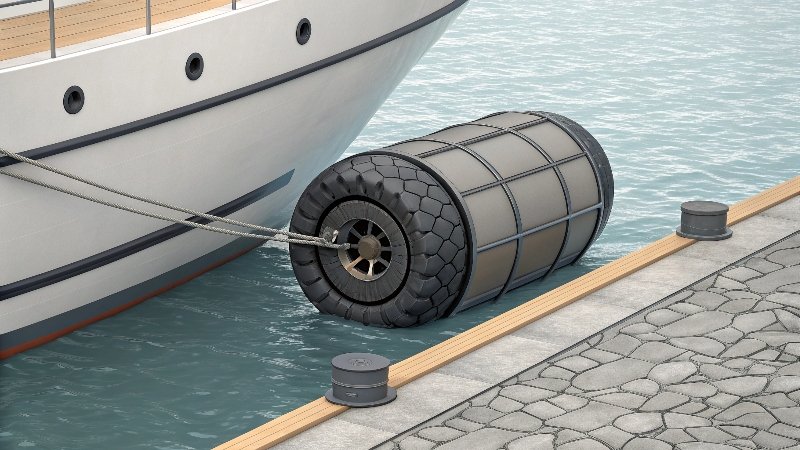
The choice of rubber is everything. It's not just "rubber"; it's a carefully designed recipe. Natural rubber offers excellent elasticity and strength, which is perfect for absorbing big impacts. SBR, a synthetic rubber, offers better resistance to aging and wear. Often, we use a blend to get the best of both worlds. But here's the problem. To save money, some factories use low-grade rubber or even recycled rubber13. These materials lack the necessary tensile strength and weather resistance. On the surface, the fender might look okay. It might even pass some basic initial tests. But it won't last. The real test comes after months of sitting dockside, waiting for installation, and then facing the elements day after day. A fender made from poor material will fail, sometimes in very dangerous ways.
What is the function of the fenders?
Do you think a fender's only job is to be a simple bumper? This misunderstanding can be costly, as a fender failure can have consequences far beyond a simple dent or scratch.
The main function of a fender is to safely absorb the kinetic energy of a berthing vessel14. This prevents damage to both the vessel's hull and the port structure, ensuring safe operations and protecting valuable assets.
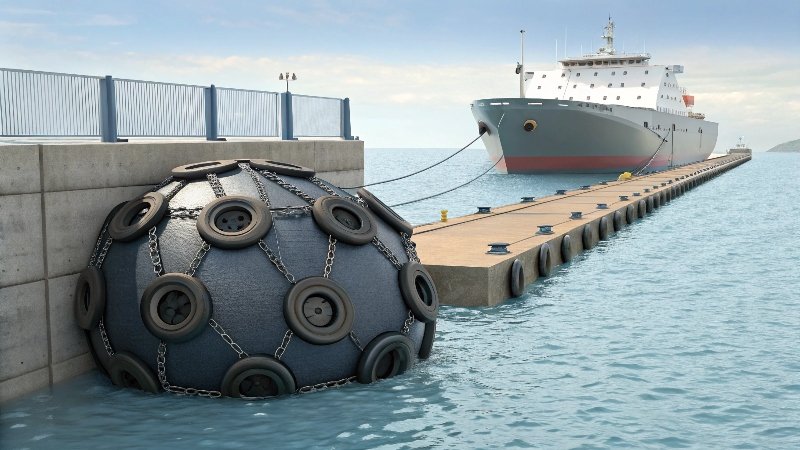
A fender's function is critical for safety and commerce. But this function is completely compromised when quality is poor. I know a factory in Yangzhou that supplied fenders to a project in South America. The fenders were delivered and sat at the port for a while before being installed. Before they were even used by a single ship, they started failing. The steel frontal panels15, which are bonded to the rubber, literally fell off. The flange completely detached from the rubber body16. Because so much time had passed since delivery, it was very difficult for the client and the local distributor to get any compensation. The local partner's business was severely damaged. This story shows the true function of a fender: it's not just a product, it's a promise of safety. When that promise is broken by poor quality, the consequences are severe for everyone involved.
Conclusion
Ultimately, the right rubber properties define a fender's performance. Choosing high-quality, durable materials is not a cost—it's an essential investment in safety, longevity, and trust for any marine project.
Get a standards-based overview of rubber fenders—types, E/R curves, materials, and tests—to verify quality and predict service life confidently. ↩
See proven lab tests (UV, ozone, salt) that predict outdoor durability so you can demand evidence before you buy. ↩
Ensure your spec resists UV, ozone, and saltwater: see which properties and PIANC/ISO tests matter to secure long-lasting fenders and avoid costly failures. ↩
Dive into compounding essentials—fillers, antioxidants, cure systems—to specify formulas that last in harsh marine environments. ↩
Ensure your fenders won’t tear under load by knowing the tensile specs and accredited tests (ISO/ASTM) to request from suppliers. ↩
Discover the key factors and standards that drive fender lifespan, helping you cut lifecycle costs and avoid premature failures. ↩
Learn accepted methods to validate weather resistance, preventing cracks and brittleness from UV, ozone, and temperature swings. ↩
Understand the physics of compression and hysteresis so you can evaluate energy curves and reaction forces intelligently. ↩
Learn how EPC procurement practices influence fender quality and the safeguards owners can require in contracts. ↩
Get a checklist of recognized benchmarks (PIANC, ISO) to separate premium fenders from risky, short-lived alternatives. ↩
Explore why NR excels at elasticity and damping, and when it’s the best choice for high-energy berthing applications. ↩
Compare NR vs SBR trade-offs to choose compounds that balance energy absorption with aging and wear resistance. ↩
Review research and case studies on recycled content in fenders to avoid hidden risks that lead to early failure. ↩
Use authoritative formulas to size fenders correctly, preventing under-spec systems that fail during real berthings. ↩
Learn typical design and bonding issues behind panel failures, and the inspections that keep berths safe. ↩
See failure modes and QA steps that catch poor bonding before installation, saving costly rework and claims. ↩
